

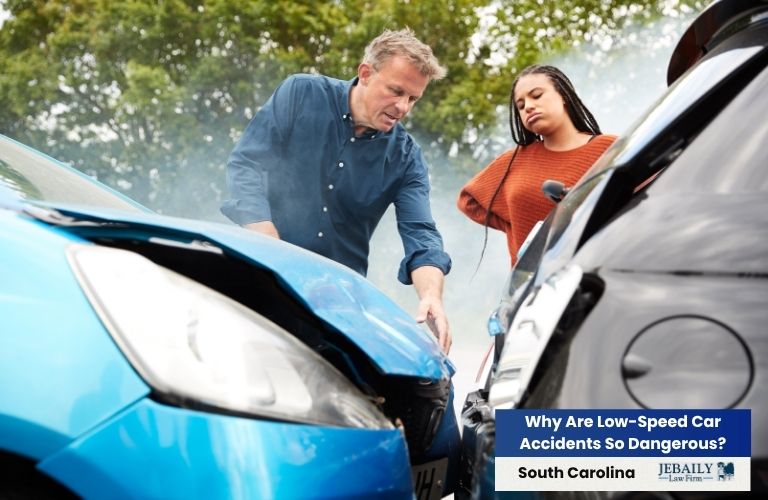
Low-speed car accidents might seem like they would not be a very big deal. But if you’ve found yourself dealing with low-speed car accident injuries, you’re unfortunately familiar with just how much harm a fender-bender can cause.
The truth is, while these accidents may not cause as much damage to vehicles as crashes that occur at higher speeds, they can still cause serious injuries to the people inside them.
Can You Recover Compensation After a Low-Speed Car Accident?
If you suffered low-impact car accident injuries in a collision someone else caused in South Carolina, you could be entitled to compensation for the resulting losses, including:
- Medical bills for any past, ongoing, and anticipated future medical treatment related to the crash
- Lost income due to missing work while you recover, including overtime, bonuses, commissions, and other income
- Reduced future earning capacity resulting from injuries that affect your ability to work
- Physical and emotional pain and suffering resulting from the collision
- Property damage to your vehicle and other personal property
Your ability to recover compensation depends on showing that the other driver or another party was responsible for the crash.
Why Low-Speed Car Accidents Can Cause Serious Injuries
Even at relatively low speeds, the force of a collision can still put significant stress on the body, especially in rear-end collisions. The impact may very suddenly throw a person forward, backward, or sideways. Because the body may not have time to brace for the crash, abrupt movement can cause harm even when the vehicles show only minor visible damage.
Vehicle damage does not always reflect the amount of force transferred to the people inside. Modern bumpers and other vehicle components are designed to absorb impact when vehicles collide, which can make a crash appear less serious than it felt to the occupants.
Other factors can also affect how much harm a low-speed collision causes, including:
- The angle of impact
- The relative size and weight of the vehicles involved
- The occupant’s position at the time of the crash
- Whether the person anticipated the collision
- The force of the impact
In other words, just because a vehicle may not look like it was involved in a severe crash does not mean the occupants did not get hurt.
Common Injuries Caused by Low-Speed Collisions
Low-speed accidents can cause serious injuries that require medical treatment and time away from work. The severity of the injuries from a low-speed crash can vary depending on the circumstances of the collision. Some symptoms may not be noticeable in the immediate aftermath.
Some examples of common low-speed car accident injuries include:
- Whiplash and neck injuries
- Herniated discs and other back and spinal injuries
- Head injuries, including concussions and other traumatic brain injuries
- Shoulder injuries
- Soft tissue injuries
- Knee and leg injuries
- Cuts, bruises, and abrasions
Getting immediate medical attention is critical after low-impact car crashes.
Contact Jebaily Law Firm to Discuss Your Low-Speed Car Accident Claim in South Carolina
If you got hurt in a low-speed car accident, Jebaily Law Firm is ready to support you in pursuing a claim against the responsible driver to pursue the maximum compensation you deserve. We have been fighting for injured people in South Carolina for over 50 years. We want to put our experience to work for you now.
Contact us right away to get started with a free consultation.