

Failing to check the driver’s blind spots is one of the most common causes of accidents and near-misses on South Carolina roads. Thankfully, new blind spot detection systems in cars can help promote safe lane-changing techniques and reduce the likelihood of an accident. But how does blind spot monitoring work?
What to Do After a Blind Spot Accident in South Carolina
The first thing to do after a blind spot accident is to prioritize your safety.
- Pull over, if possible, and call 911 to summon the police to the accident scene.
- Exchange contact and insurance information with the other driver, but limit your discussions with them and with the police to the bare facts.
- Take photos and videos of the crash scene.
- Do not speculate on fault or discuss your injuries with the insurance company.
- Get help from our experienced car accident lawyers instead.
How Blind Spot Monitoring Systems Help Prevent Collisions
If you are unfamiliar with the technology, you might wonder, “How do blind spot monitors work?” The systems use sensors to detect vehicles traveling in areas that may be difficult for a driver to see.
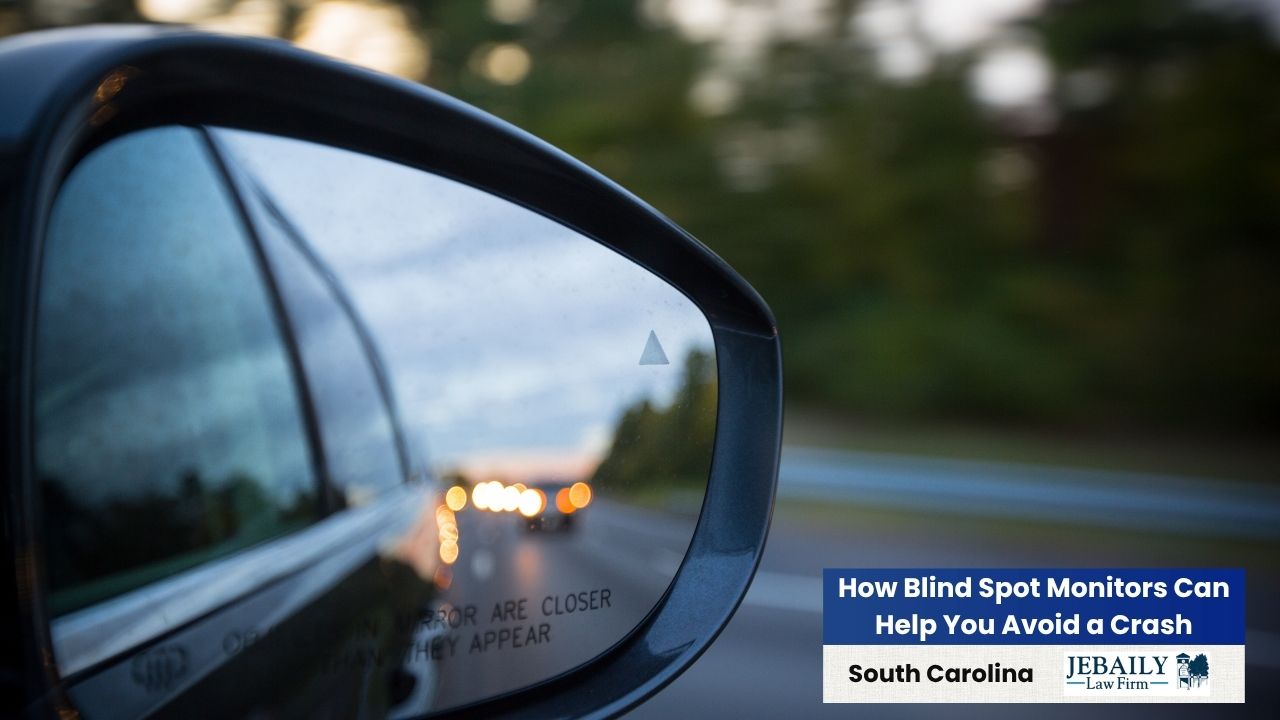
Many modern vehicles have blind spot sensors built into the rear bumper or side mirrors. The sensors can scan the areas beside and just behind the vehicle. When the sensors detect another vehicle entering the vehicle’s blind spot, the system alerts the driver, usually by illuminating an indicator light in the side mirror.
Some vehicles also use audible warnings or steering wheel vibrations if the driver signals a lane change while another vehicle is nearby. The warnings give drivers another cue before they move into another lane or merge into traffic.
Common Limitations of Blind Spot Detection Technology
Although blind spot monitors and crash warning systems can monitor for objects and help drivers notice nearby vehicles, they are no replacement for careful driving. Unfortunately, they do not always detect every car, motorcycle, bicycle, or pedestrian in every situation.
Poor weather conditions, dirty sensors, poor lighting, and fast-moving traffic can all affect how well a blind spot detection system works. If you change lanes very suddenly, the alerts may not come in time to avoid a crash. For that reason, you should still check your mirrors, look over your shoulders, and signal before moving into another lane.
How Driver Assistance Technology Supports Safer Driving Habits
Safe driving is a matter of making careful decisions and staying alert behind the wheel. Various forms of driver assistance technology can support safer driving by giving you more information before you make a move.
Blind spot monitors, lane departure alerts, backup cameras, and similar tools can help you notice risks you might otherwise miss. Over time, you may find yourself slowing down, signaling earlier, and paying closer attention to surrounding traffic without relying on reminders from the technology.
Contact Our Car Accident Attorneys in South Carolina for a Free Consultation
If you got hurt in a blind spot accident, the personal injury attorneys at Jebaily Law Firm can explain your legal options and pursue compensation for your losses. Contact us today to arrange a free initial consultation with an experienced car accident lawyer.