

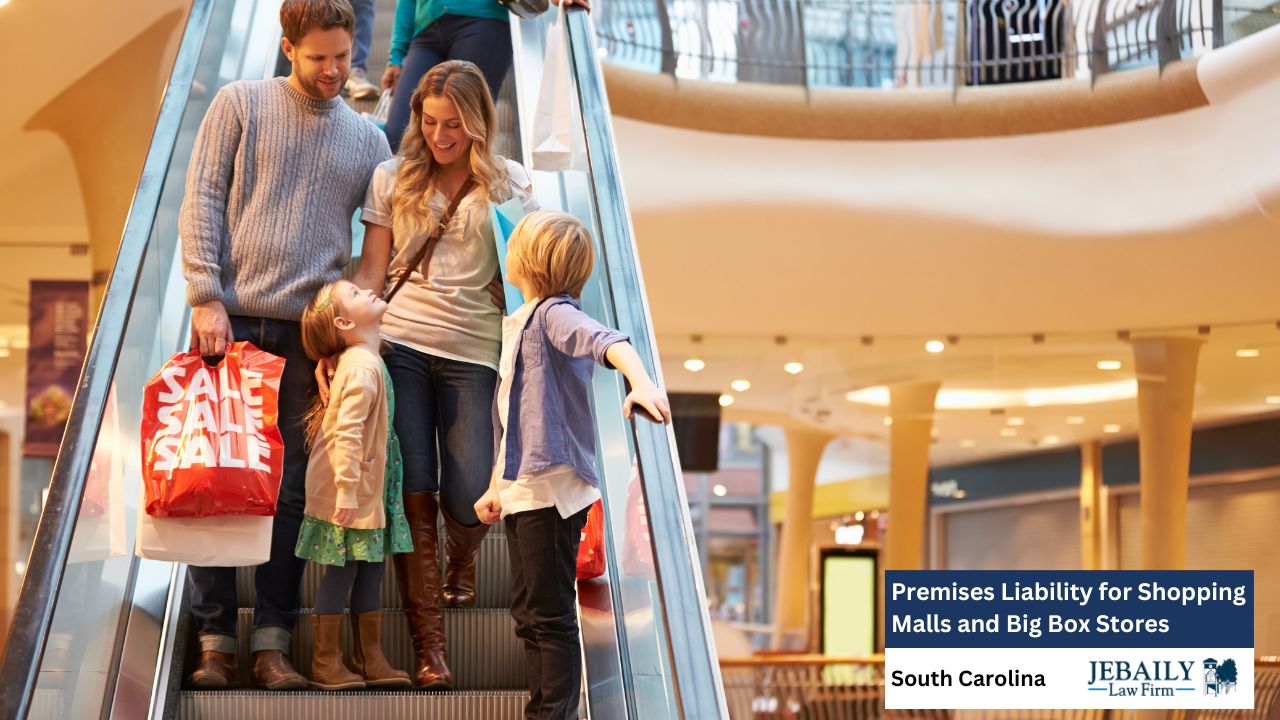
Visiting retail stores and shopping centers is part of everyday life for people in South Carolina. Most shopping trips are uneventful, but accidents can happen in retail environments. From grocery stores to shopping centers to large retail chains, the potential for injury exists when property owners fail to maintain safe conditions.
Slip-and-fall accidents, falling merchandise, inadequate security, and parking lot hazards are just a few examples of the dangers shoppers may encounter at shopping malls and big box stores.
Under South Carolina premises liability law, property owners and other responsible parties have a legal obligation to keep their businesses reasonably safe for visitors. If you have been hurt due to unsafe conditions at a retail location, you may have grounds to pursue compensation through a premises liability claim.
Jebaily Law Firm is committed to helping injured people pursue justice and recover damages for shopping mall injuries. Contact us now for a free consultation about your personal injury claim.
Maximizing Compensation for Injuries in Shopping Malls and Retail Stores
The financial impact of a shopping center accident can be significant. Medical bills, lost wages, and treatment costs accumulate quickly, especially when injuries are serious. And that is to say nothing of the pain, suffering, and lost enjoyment of life.
Victims often ask how much to ask for compensation for a store injury, which depends on several key factors. Economic damages include medical expenses such as emergency care, surgery, therapy, and medications. Lost income also matters, as does the cost of future care or disability.
Non-economic damages cover pain, emotional distress, and reduced quality of life.
Documentation is crucial. Keep records, photos, and journals detailing your recovery. An experienced premises liability attorney from Jebaily Law Firm can evaluate these elements and help pursue full and fair compensation for all your losses after an accident at a big box store or mall in South Carolina.
How to Gather Evidence for a Premises Liability Case in a Retail Setting
Strong evidence is the foundation of a successful premises liability claim. Without proper documentation, even valid cases can be hard to prove. Evidence-gathering should begin immediately after the accident.
- Report the incident to store management.
- Complete an incident report and keep a copy for your records.
- Take photographs of the hazard from multiple angles, showing the area and conditions.
- Keep any shoes or clothing you were wearing at the time if they show, for example, residue from a spill.
- Gather witness names and contact details to support your version of events.
- Seek medical attention right away and follow all treatment instructions to link your shopping mall injuries to the accident.
- Request preservation of security footage before it is deleted.
Our attorneys are ready to assist you with investigating the accident, securing evidence, and building a strong claim for maximum compensation from the insurance companies.
Negligent Maintenance and Hazardous Conditions in South Carolina Retail Stores
Retail property owners and managers have a legal duty to keep their premises reasonably safe for customers. The responsibility covers all public areas, including sales floors, restrooms, and parking lots, among others. Negligent maintenance creates dangerous conditions that put shoppers at risk.
Common hazards include damaged flooring, broken tiles, torn carpets, and uneven surfaces. Wet floors and spills are another major cause of injuries. Owners must quickly identify and address hazards or provide clear warnings.
Poor lighting in parking areas or stairwells increases accident risks and must be corrected. Merchandise should be stored safely, with aisles kept clear. During winter, owners must promptly remove ice and snow to prevent slip-and-fall accidents.
Parking Lot Injuries at Shopping Centers and Big Box Stores in South Carolina
Parking lots are among the most hazardous areas of retail properties due to vehicle traffic, pedestrians, and often poor maintenance. Property owners have a duty to keep these areas safe, but violations are common.
Poor pavement conditions cause many injuries, including broken bones, head trauma, and spinal injuries. Potholes, cracks, and uneven surfaces are worsened by poor drainage, which can hide hazards. Inadequate lighting increases risks, making it difficult to see hazards and raising the potential for criminal activity.
Proper line markings and signage are essential for guiding drivers and pedestrians safely. Faded lines and missing signs contribute to accidents. Shopping cart corrals must be maintained to avoid sharp edges, and scattered carts can obstruct pathways.
Security measures, including cameras, lighting, and personnel, are necessary to protect shoppers from assault and theft when conditions demand it. Failure to maintain parking lots or provide adequate security can support a premises liability claim if someone gets hurt.
Holiday Season Crowd Accidents in Big Box Stores: Who Is Liable?
The holiday shopping season draws large crowds to big box retailers and malls, increasing the risk of injuries caused by unsafe conditions. Retailers must take reasonable steps to keep shoppers safe during these busy periods.
Crowd-related injuries often occur when stores fail to manage foot traffic. Stampedes and surges have happened during major sales, especially when limited-quantity deals attract large numbers of shoppers.
Retailers must use barriers, security staff, and organized entry procedures to control crowds. Fights can also arise, requiring adequate security and a quick response. Blocked aisles from excess merchandise create tripping hazards and must remain clear. Overstocked shelves that make items prone to falling are also dangerous.
Children face added risks in crowded spaces, and stores must ensure safe conditions for them. Proper staffing is vital for monitoring floors, cleaning spills, and addressing hazards. When retailers fail to manage crowds, maintain order, or provide sufficient staff, they may be liable for resulting injuries.
Common Causes of Accidents in Big Box Stores and How Liability Is Determined
Big box stores and shopping centers present unique challenges for premises liability claims due to their size and multiple risk areas.
- Slip-and-fall accidents are the most common incidents at big box stores, often caused by spills, tracked-in water, or freshly mopped floors without warning signs. Liability depends on whether the store’s operators knew or reasonably should have known about the hazard and failed to act.
- Falling merchandise is another frequent danger, with poorly stacked or unsecured items causing serious injuries when they fall. Stores must store goods safely and keep displays stable.
- Forklift and equipment accidents also occur when machinery operates near customers. Proper safety protocols require restricting such use or closing off the area.
- Escalator and elevator malfunctions can result in severe injuries if maintenance is neglected.
Determining liability involves assessing whether the hazard existed long enough to be discovered and if staff were properly trained to address it. Under South Carolina law, property owners must use reasonable care and take prompt action to prevent foreseeable injuries.
Talk to Our South Carolina Premises Liability Attorneys for a Free Consultation
Shopping accidents can leave you with serious injuries, growing medical bills, and lost income. When property owners fail to maintain safe stores and parking lots, you should not have to pay the price.
Jebaily Law Firm has been standing up for injured people in South Carolina since 1969. From Florence to Myrtle Beach, our team listens to every client, understands their struggles, and fights for fair compensation.
If you were hurt in a shopping accident, contact us today for a free consultation with an experienced personal injury attorney.